

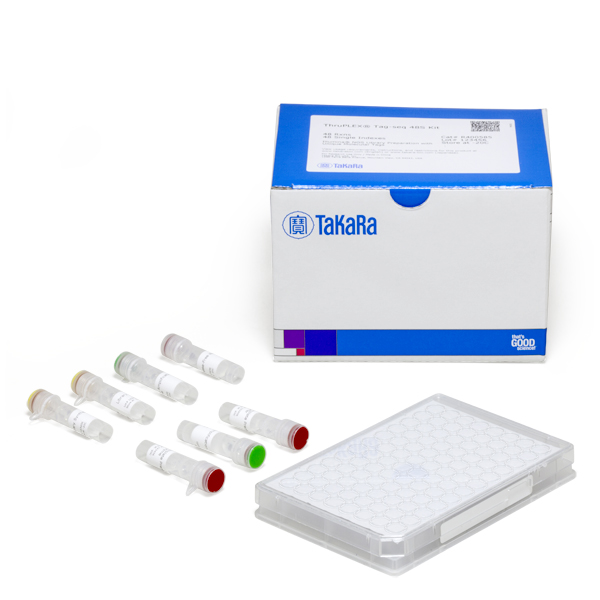
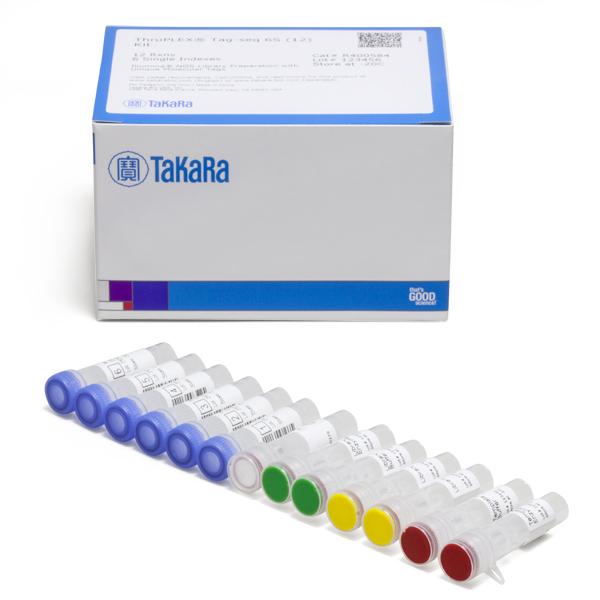
ThruPLEX Tag-seq combines molecular tags with ThruPLEX chemistry to construct molecularly tagged and sample-indexed Illumina NGS libraries. Each kit contains more than 16 million unique sequences used to tag individual DNA fragments prior to amplification, providing tracking of the fragments through library preparation, target enrichment, and data analysis to detect low-frequency alleles or count individual fragments.
ThruPLEX chemistry is engineered and optimized to produce highly diverse libraries with reproducible sequencing performance from 1 to 50 ng of DNA. The entire three-step workflow takes place in a single tube or well in about 2 hours. No intermediate purification steps or sample transfers are necessary, which prevents handling errors and loss of valuable samples. The ThruPLEX Tag-seq kit includes all necessary reagents (including indexes) for multiplexing up to 96 samples. Once purified and quantified, the resulting library is ready for Illumina NGS instruments using standard Illumina sequencing reagents and protocols.
Overview
- Results you can trust—ThruPLEX Tag-seq technology provides up to 16 million molecular tags to correct sequencing errors, providing confident variant detection
- Discover more, cost effectively—use with hybridization-based target enrichment systems to examine hundreds of genes, including mutations and structural variants, simultaneously
- High-quality libraries the first time, every time—unparalleled ease of use reduces user error and contamination with our single-tube, two-hour, three-step workflow
- Precious samples go further—use less DNA to analyze samples once too low to detect; ThruPLEX Tag-seq works with input amounts from 1 to 50 ng of cfDNA or fragmented dsDNA to accommodate a wide range of samples
Applications
- Detection of low-frequency alleles and rare mutations
- Identification of unique copies of library molecules
- Cancer research: detection of somatic mutations in cell-free DNA and FFPE DNA samples via targeted sequencing
- Infectious disease: identification and quantification of microbial or viral DNA in human samples
