Tools for delivering Cre recombinase
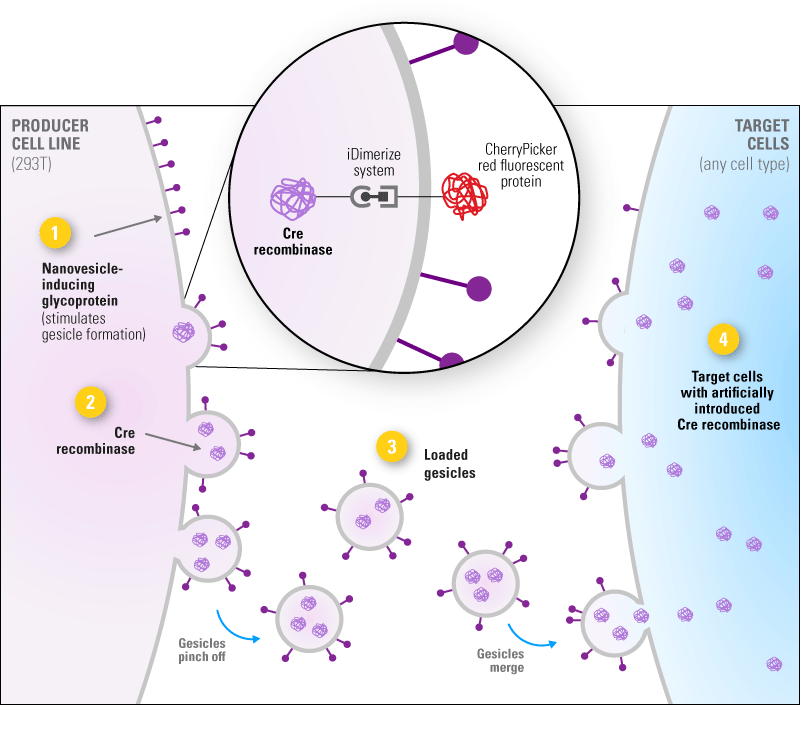
Cre Recombinase Gesicles are cell-derived nanovesicles used to deliver active Cre recombinase protein directly into target cells. When they are applied to your target cells, the gesicles fuse with the plasma membrane and deliver a temporary dose of Cre recombinase, which facilitates recombination at loxP sites contained within the cell. As an added benefit, Cre Recombinase Gesicles contain CherryPicker protein, a membrane-targeted version of the mCherry fluorescent protein that helps to confirm the delivery of the Cre recombinase to your target cells.
Applications
- For knockout and knockin studies
- Limit and control site-specific recombination events including deletions, insertions, translocations, and inversions
What is Cre recombinase?
Cre recombinase is a site-specific recombinase isolated from P1 bacteriophage that catalyzes the recombination between two 34-bp loxP sites. The enzyme is widely used for knock-out and knock-in studies: any DNA sequence located between two tandem repeats of loxP can be excised to create a deletion mutant, or a plasmid containing a single loxP site can undergo site-specific integration into a genome containing loxP to create an insertion mutant.
What are the benefits of gesicle technology?
- Far simpler to use than either plasmid or viral gene delivery. Simply apply 10–20 µl of the gesicles to your target cells; no preparation or pre-treatment is required.
- Flox your cells on demand: Cre recombinase is present when you need it and gone when you don’t.
- Can be used with many cell types, including dividing and non-dividing cells, primary cells, and cell lines.
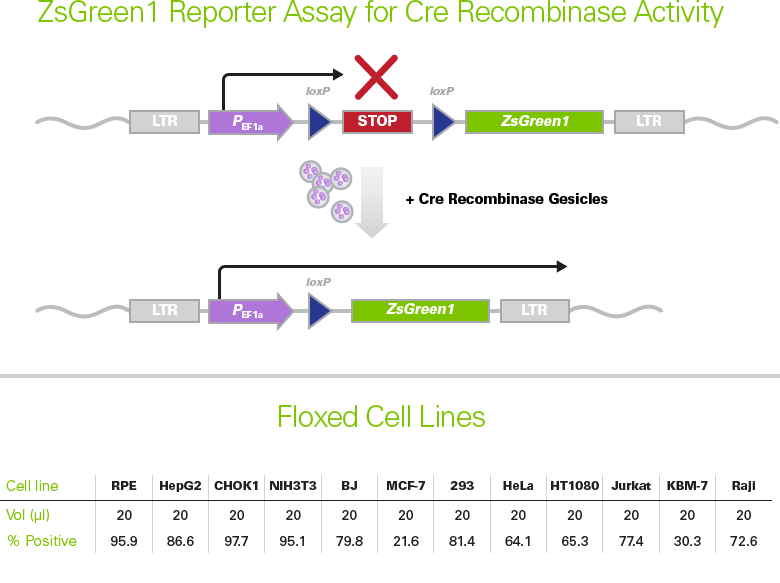
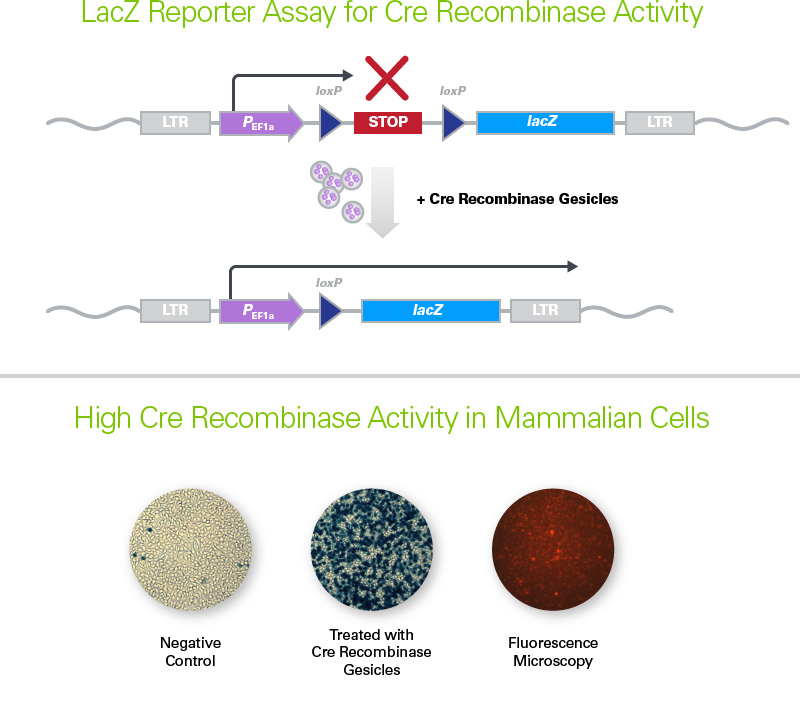
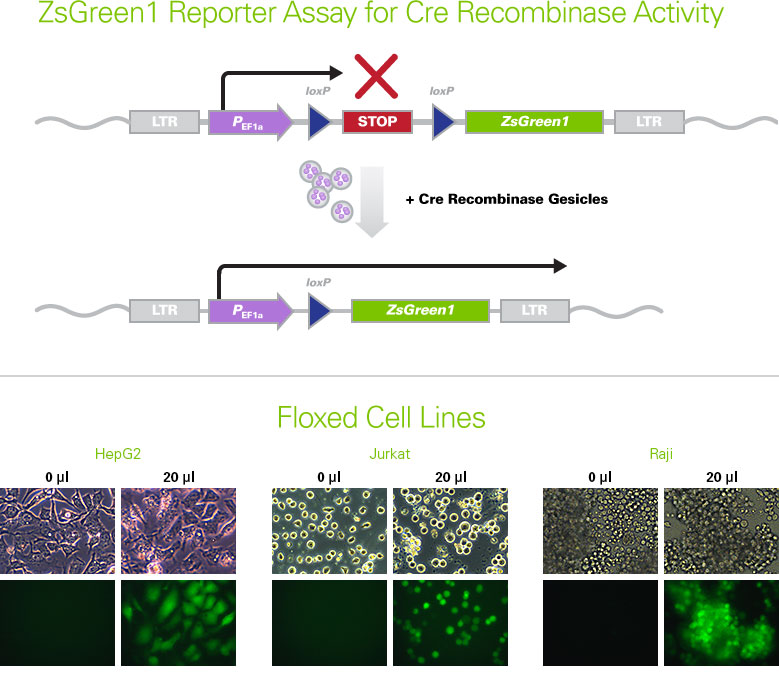
- Ensure efficient delivery and high activity of Cre recombinase (expand the Details tab in the product table to see data images). When using gesicle delivery, there is no delay for transcription/translation: the protein is present and active as soon as you apply the gesicles to your cells.
- Since there is no coding gene present, there is no risk of sustained Cre recombinase expression in your target cells. It is present when you need it and gone when you don’t, so you avoid unwanted recombination events.